FREE WORLDWIDE SHIPPING
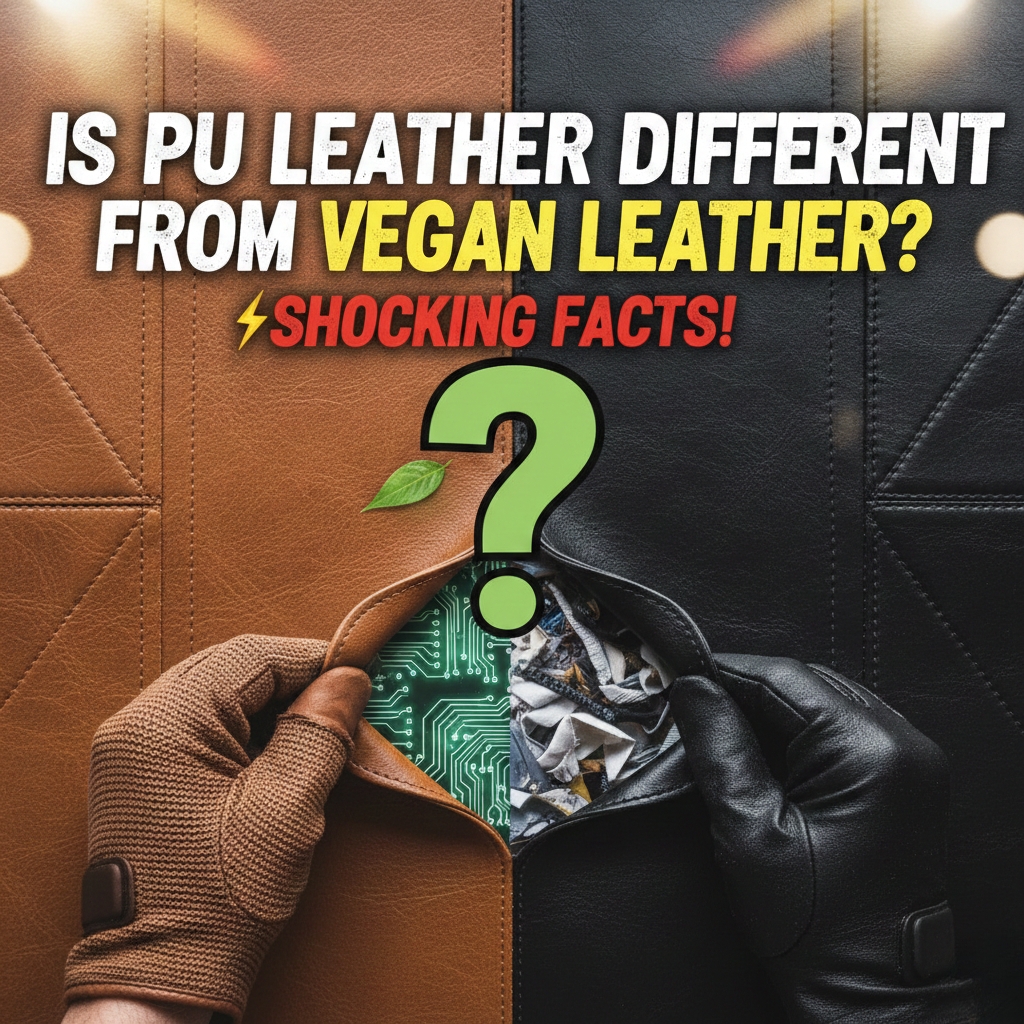
We all love the idea of cruelty-free fashion, no animals harmed, and a stylish wardrobe that feels good on our conscience. But here’s the shocking fact: Is PU Leather different from vegan leather? It is not as straightforward as it sounds. Most “vegan leather” out there is still plastic-based, which many brands conveniently hide.
So, what exactly are we talking about? There are two main categories: PU leather (the plastic-based default) and plant-based leather (the eco-friendlier, bio-hybrid option). Understanding this difference is important because it affects durability, maintenance, environmental impact, and ultimately your buying decisions.
In this blog, we’ll cover:
By the end, you’ll know which type of leather suits your lifestyle, and your planet-friendly goals.
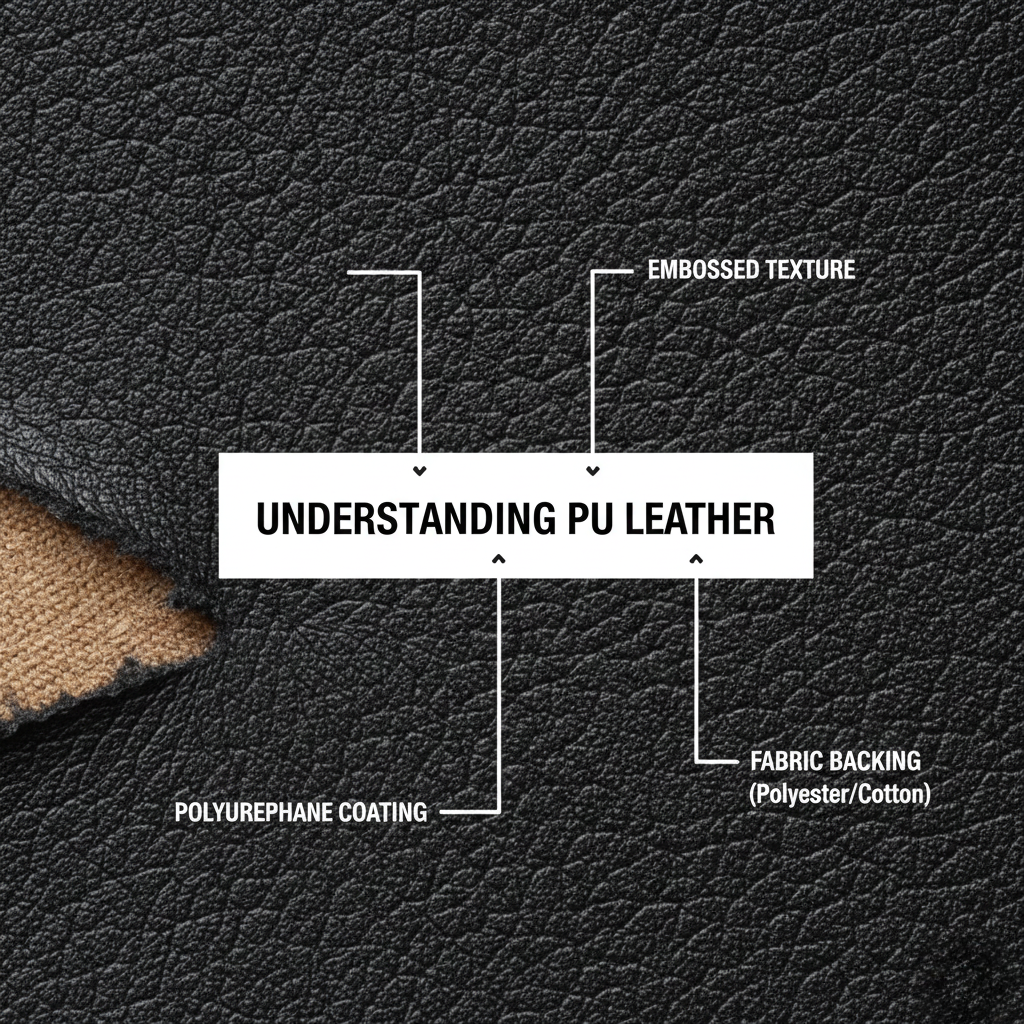
Let’s start with the basics: what is PU leather? PU stands for polyurethane, a plastic polymer that is coated onto fabric to imitate real leather. It’s the most common material behind “vegan leather” goods.
Here’s why:
PU Leather Durability: Premium PU leather can survive over 100,000 abrasion cycles and 50,000+ flex cycles, tested by the industry-standard Martindale test. That’s why it’s used in high-stress applications like car seats, furniture, and frequently worn jackets.
Affordability and Practicality: PU is cheap, easy to clean, and resists water and stains. For example, the Men’s Heritage Brown Biker Style Hood Leather Jacket uses PU to combine a leather-like feel with practical durability.
Why PU dominates: It’s technically durable, low-cost, and requires minimal maintenance, making it the default choice for brands selling men’s leather jackets and women’s leather jackets.
Here’s the downside: PU is plastic.
In short, while PU wins on practicality and PU leather durability, it falls short on sustainability.

Eco-conscious consumers are turning to plant-based leather, made from pineapple leaves (Piñatex), apple peels (AppleSkin), mushrooms (mycelium), and more. But here’s the catch:
Many of these bio-hybrids still contain a thin PU or bio-PU coating. This layer provides water resistance, UV stability, and structural integrity. Always check the percentage bio-content on the label. This tells you how much of the material is truly plant-derived.
Unique takeaway: Not all plant-based leather is 100% plastic-free, so knowing the content is key to making a sustainable choice.
The Loss: Plant-based leather often has lower abrasion resistance — 20,000–30,000 cycles — compared to high-grade PU. This means it’s less suitable for belts, footwear, or jackets that see heavy daily use.
The Win: Plant-based leather often feels softer, warmer, and drapes better due to its natural fiber base. This makes it ideal for fashion-forward men’s and women’s leather jackets, where comfort and style matter.
Carbon footprint comparison:
Plant-based leather isn’t fully compostable yet, but it’s the only material moving toward true circularity and biodegradability. It represents a future where fashion and sustainability can coexist.
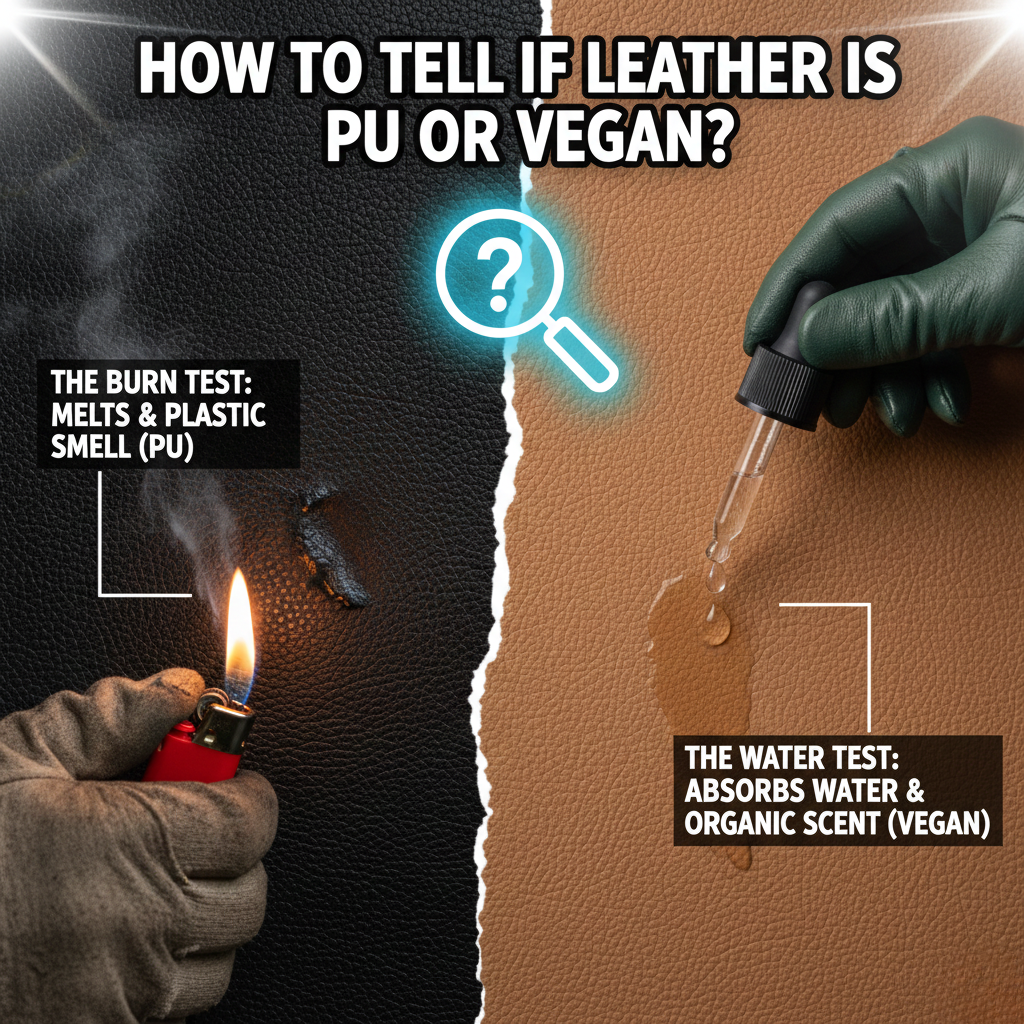
You don’t need a lab to make smart choices. Try these practical tests:
PU Leather Care: Clean with mild soap and water. Avoid alcohol or harsh chemicals that can crack or peel the material.
Plant-Based Leather Care: Use a water-based vegan conditioner or re-waxing to maintain the natural fiber base and prevent drying or fraying.
By understanding PU leather durability, environmental impact, and maintenance needs, you can make a choice that aligns with your lifestyle and values.
Vegan leather is no longer just about being cruelty-free, It must be planet-friendly, durable, and transparent.
Your options:
For those exploring plant-based leather alternatives and modern designs, check out Velvro Leather. Choosing the right leather isn’t just a fashion statement, It’s a statement about your values.
1. Is vegan leather the same as PU leather?
No. PU leather is a type of vegan leather, but not all vegan leather is PU. Vegan leather also includes plant-based materials.
2. What is PU leather made of?
PU leather is made from polyurethane, a plastic coating applied to fabric to mimic real leather.
3. Is PU leather environmentally friendly?
No. PU leather is plastic-based, non-biodegradable, and contributes to microplastic pollution, making its environmental impact harmful.
4. Is plant-based leather better than PU leather?
For sustainability, yes. Plant-based leather has a lower carbon footprint, but PU leather is usually more durable and affordable.
5. How long does PU leather last?
High-quality PU leather can last 5–10 years with proper care, depending on usage and maintenance.
6. How can you tell if leather is PU or vegan?
Check the label for “polyurethane” or “PU,” do a smell test, feel for a rubbery texture, and compare pricing.
7. Does plant-based leather contain plastic?
Often yes. Most plant-based leathers are bio-hybrids and still use a thin PU coating for durability.
8. Which is better for jackets: PU or plant-based leather?
PU is better for daily wear and durability, while plant-based leather is better for eco-conscious, lightweight fashion.
9. Is vegan leather more ethical than real leather?
It avoids animal cruelty, but only plant-based vegan leather offers real environmental benefits over animal leather.
10. Can vegan leather be repaired like real leather?
No. Once PU leather peels or cracks, it cannot be fully restored like genuine animal leather.